
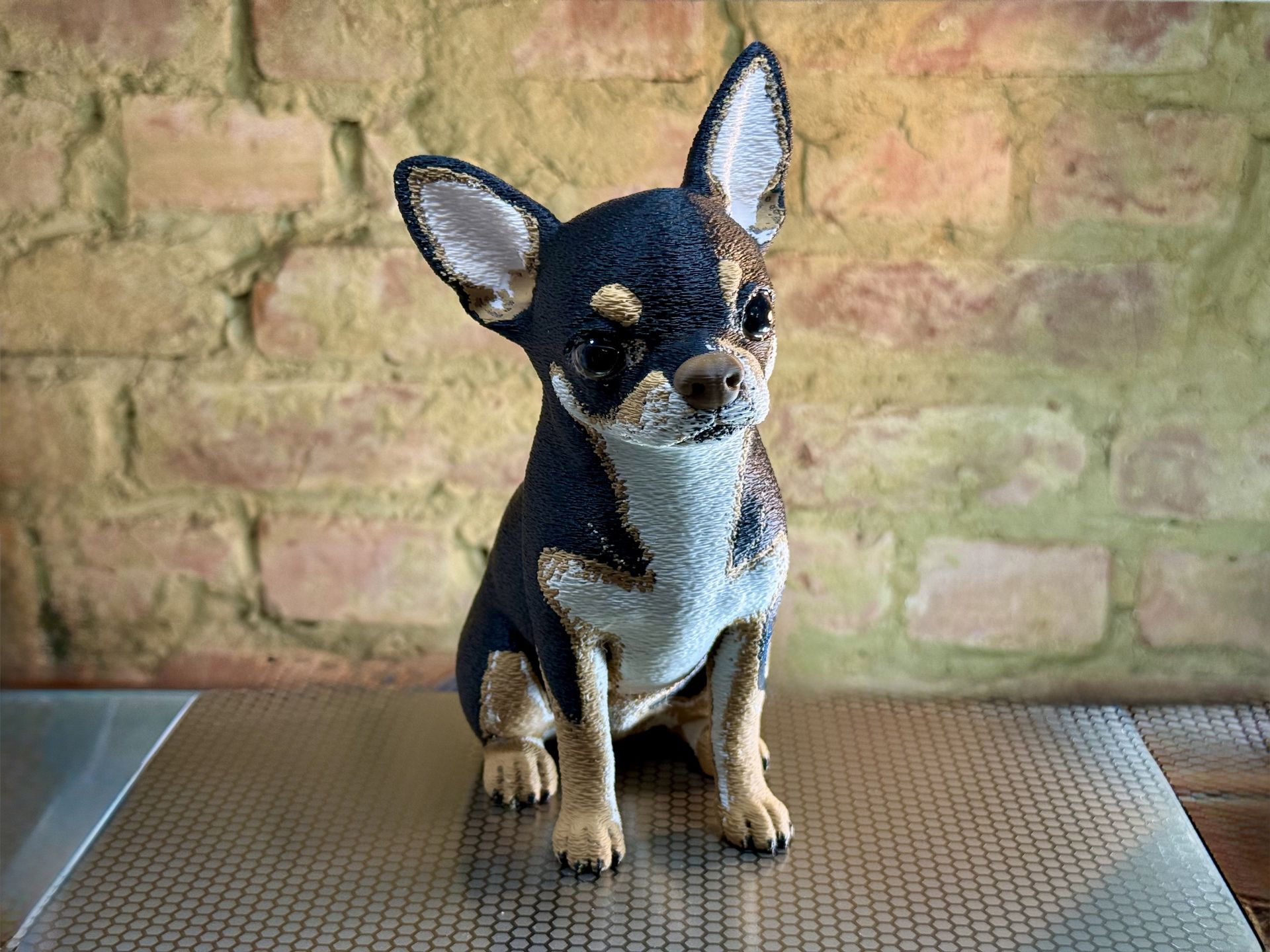
(Photo: The finished figurine of Pooky)
Take a good look at this figurine. The black coat with the tan markings above the eyes. The white chest. The ears that stand just slightly outward. This is Pooky, and anyone who looks at the photo below will recognise him immediately. That is exactly the intention.
But what you do NOT see in this photo are the 38 hours that preceded it. In this article, we take you behind the scenes, from photo to final layer.
It starts with one photo
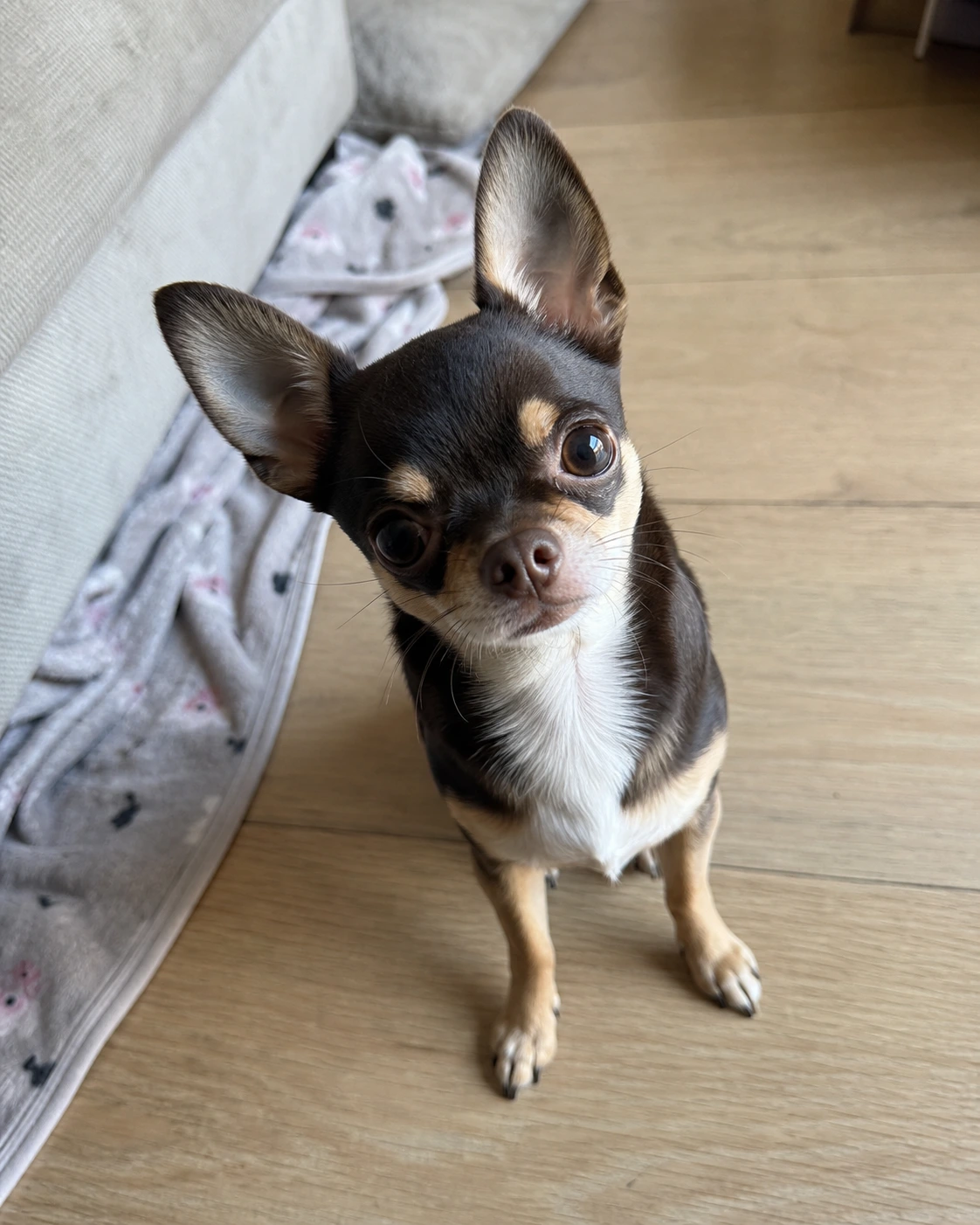
(Photo: the source photo of Pooky)
Meet Pooky, our demo model. Using Pooky, we show exactly what you can expect from a 3D Pets figurine and what we need to get started: one good photo. Nothing more. No 3D scanner, no photo studio, no complicated commands for your pet ("Sit! Stay! Look at the camera!", we all know how that ends).
From that one photo, we build the complete figurine.The pose, the proportions, and above all: every colour spot in exactly the right place. Just compare the photo and the figurine side by side. The tan eyebrow spots, the outline around the snout, the white chest that runs between the front legs: it all matches.
The digital sculpting
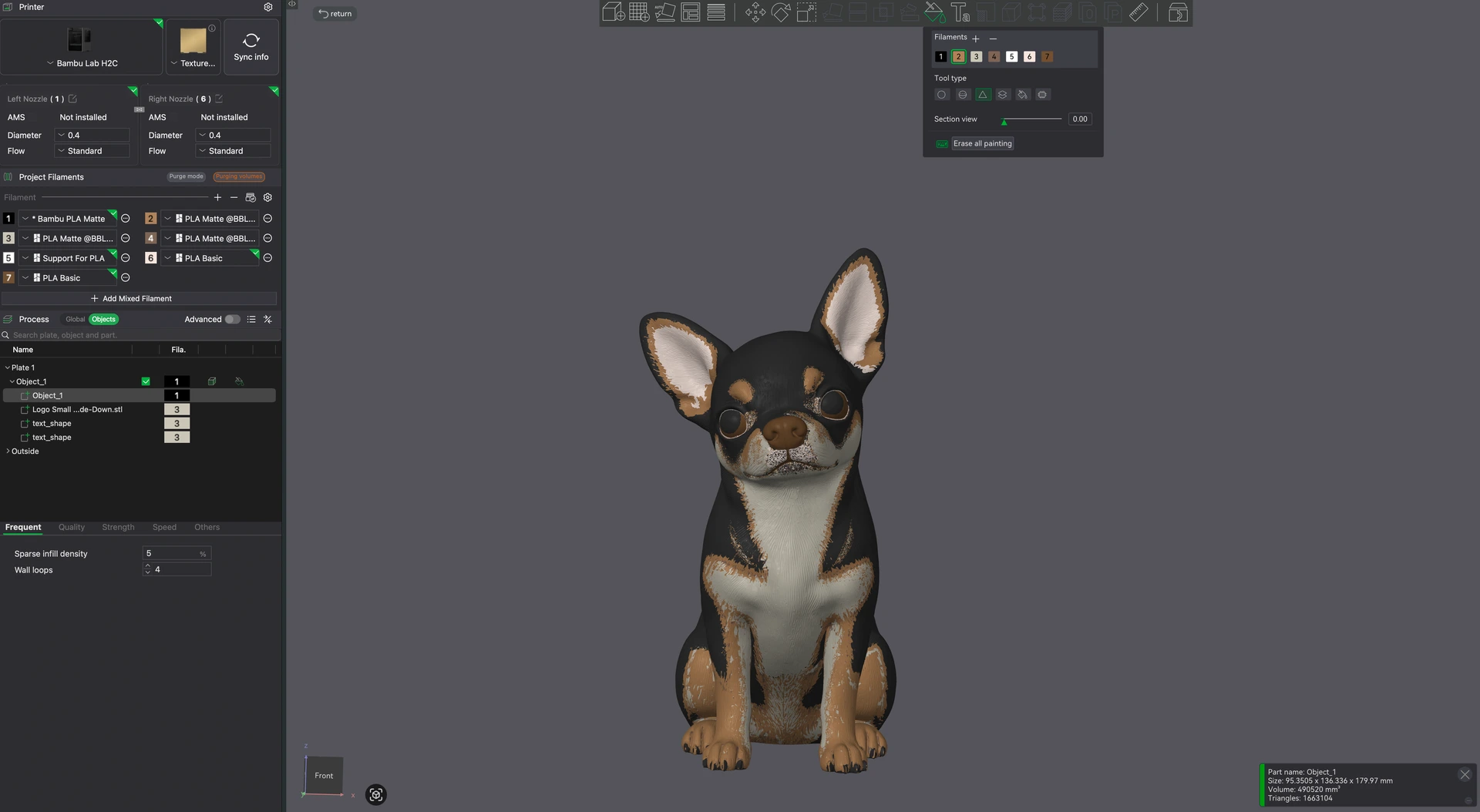
(Photo: the manual colouring of the 3D model)
Before even one gram of filament is melted, the most important work happens on the screen.
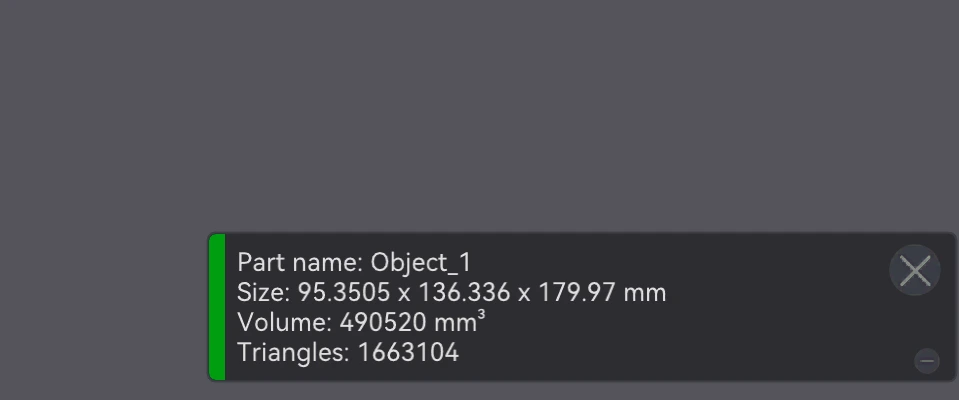
The 3D model of this figurine consists of 1.66 million small triangles: the digital equivalent of modelling clay, but on a micron level.
And then comes the real handiwork: the colouring. Seven different colours of filament are manually assigned to the model, spot by spot, exactly as the fur of the real dog runs. This is not an automatic filter or a push of a button. This is digital painting, with the customer's photo next to it as a reference.
Colouring a figurine quickly takes 3 to 4 hours. Here the likeness emerges. Not in the printer, as it only executes what we have drawn.
The numbers that no one suspects
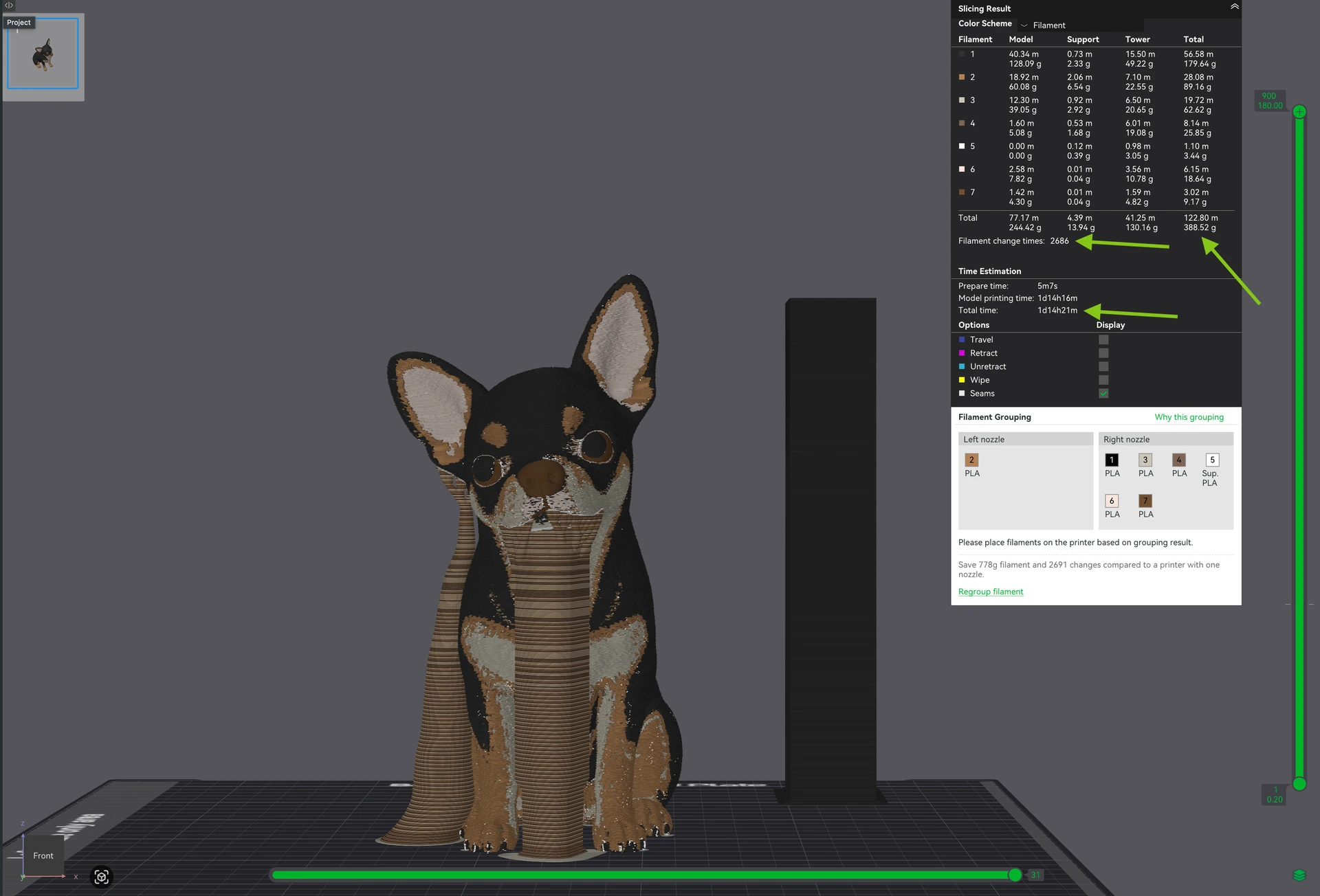
Ready? These are the numbers behind this one figurine of 18 centimetres tall:
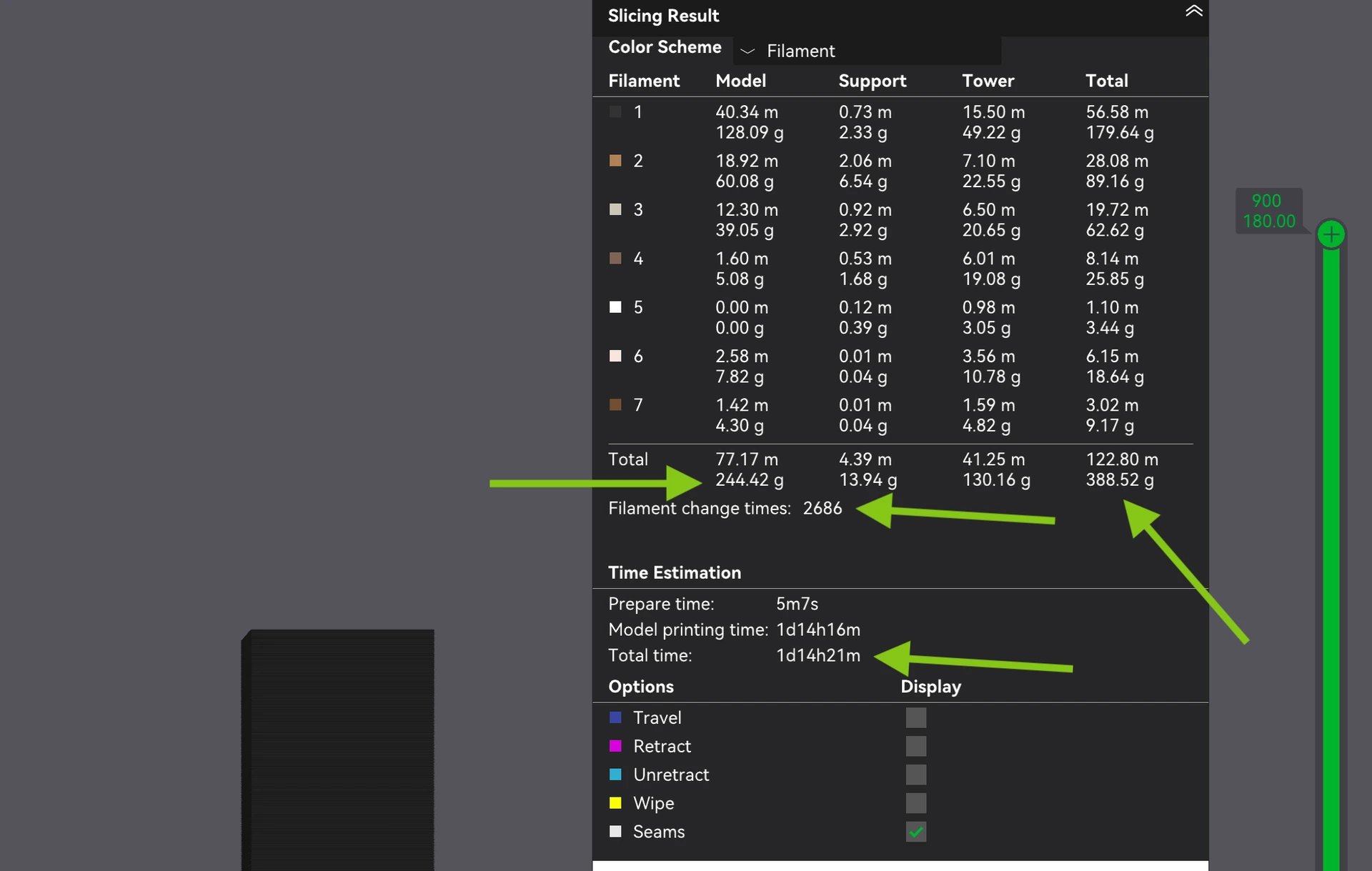
- 2,686 colour changes. Almost three thousand times the printer changes filament to place each colour spot in the right place.
- 122 metres of filament. More than a football field of wire, built up layer by layer.
- 388 grams of material, spread over 7 colours.
- 38 hours of print time. One day and fourteen hours. Longer than a full working week of a part-time job for one little dog.
The printer just keeps running at night while the whole house sleeps. And every morning there’s a few more centimetres of chihuahua on the print bed.
Millimetre work
(Photo: the close-up of the little face)
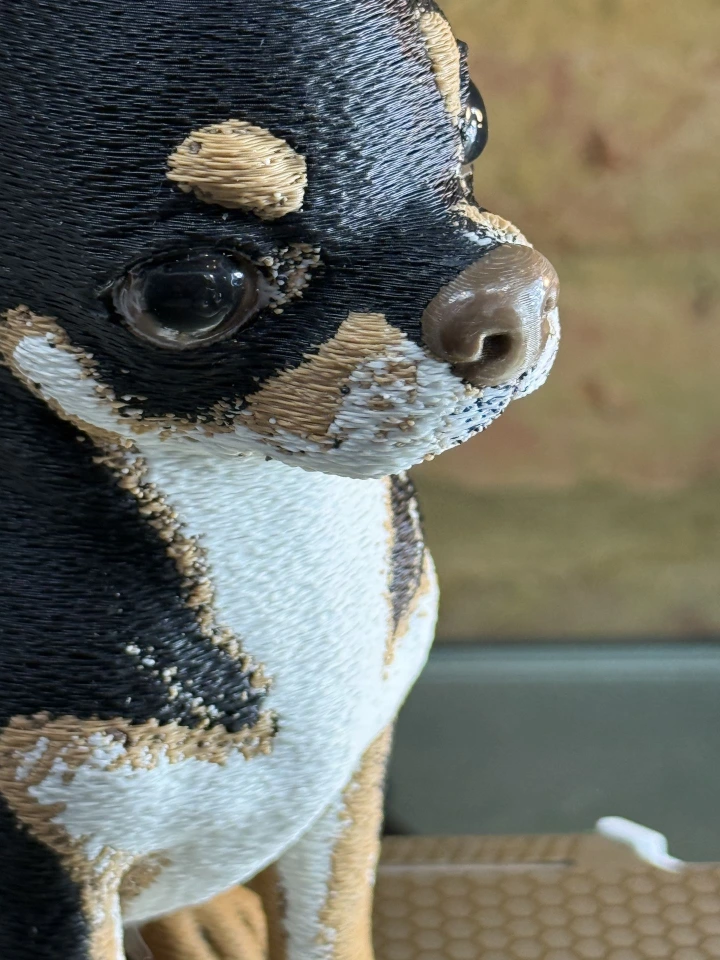
Zoom in on the little face. Do you see the structure of the fur? That texture is no coincidence — the print layers mimic the direction and the relief of real hairs.
The eyes shine like real dog eyes. They are covered very precisely with a fine brush under a layer of UV resin, which after curing gives perfectly glossy little eyes. The nose is polished with a special laser-cut glass file. The file has the equivalent of sandpaper with a grit of 10,000!
This kind of detail is where we make the difference. You recognise a figurine from two metres away by its colours. But it’s at ten centimetres, in your hands, that it touches you.
Why this can only be done with the right machine
Pooky was printed on our Bambu Lab H2C, the latest flagship with a dual print head, of which 1 print head can switch between 6 different nozzles during printing. That sounds technical, but it comes down to this: because a total of 7 nozzles share the work, we save 778 grams of wasted filament and nearly 2,700 extra colour changes on this one figurine compared to a regular printer.
Less waste, tighter colour transitions, and a result that we simply couldn’t deliver otherwise. We invest in this material for one reason: your pet deserves better than "good enough".
From photo to windowsill
Pooky is our demo model, but every figurine that leaves our studio starts the same: with a photo of a pet that someone loves. Sometimes as a tribute to a loyal friend who is no longer here. Sometimes just because that little treasure deserves a spot on the shelf.